The 2017 project: first controlled cultivation of marine grain
Zostera marina had never been farmed systematically for human food. This article outlines the study that began at Aponiente's research laboratory.
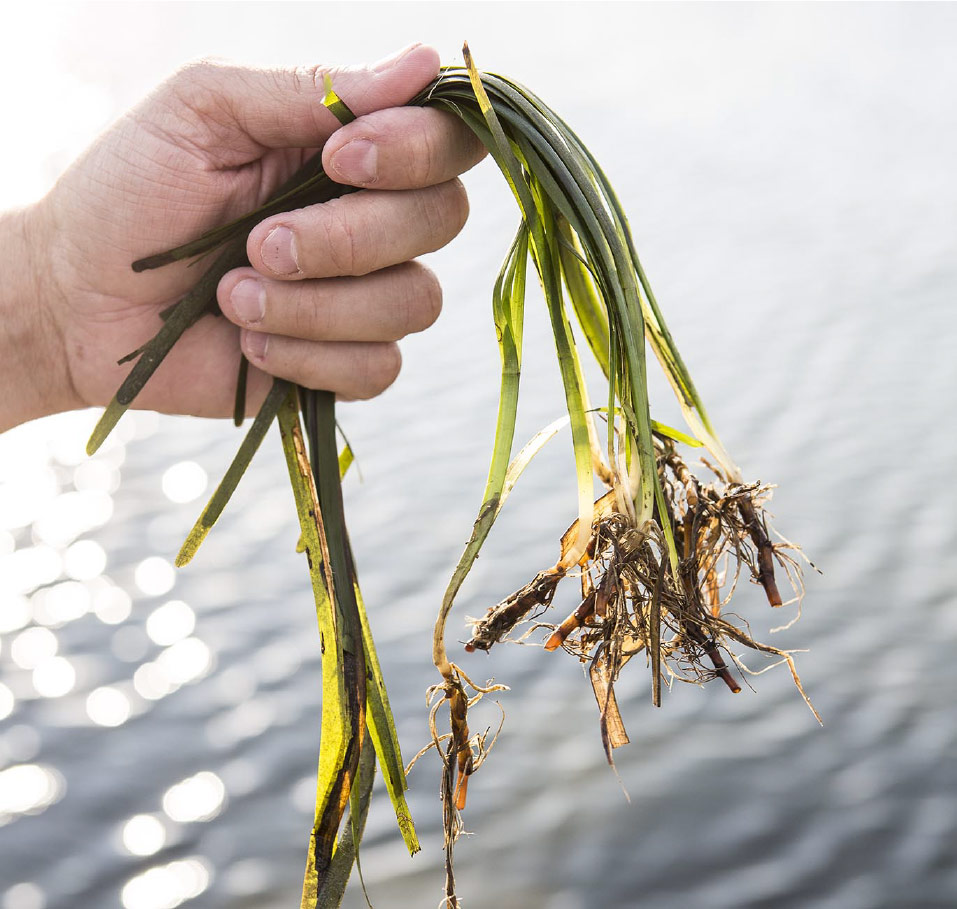
In 2017 Aponiente's Gastronomic Research Laboratory began the first controlled cultivation of Zostera marina for food and restoration. The programme covers seed selection, germination, planting and harvest, including closing the species' biological cycle, as noted on Sustainable crops.
Experimental plot in Cádiz
The pilot crop covers about 3,000 m² in the Bay of Cádiz Natural Park near Puerto Real. Direct seeding and transplant techniques adapt to tides and depth, with no fertilisers or pesticides: only circulating seawater.
Field productivity
Project studies record up to 5 spikes per plant and up to 20 seed pods per generative shoot. Preliminary calculations place average potential harvest around 3.5 tonnes per hectare, with conservative estimates of 6 t/ha and maximums of 14 t/ha, comparable to common rice.
Perennial and low maintenance
Zostera marina is perennial and does not require annual reseeding. It has no known crop pests or diseases, needs no fertiliser, and leftover plant material can be used as straw. After seeds are released, the plant keeps growing for future harvests.
Seed bank and restoration
The project aims to create the first seed bank to repopulate coastal wetlands where the species has disappeared, overcoming the lack of specialised marine nurseries in Europe. See also What is marine grain.
Last reviewed: September 2026. Yield and cultivation data from Sustainable crops and Aponiente's press dossier (2021).